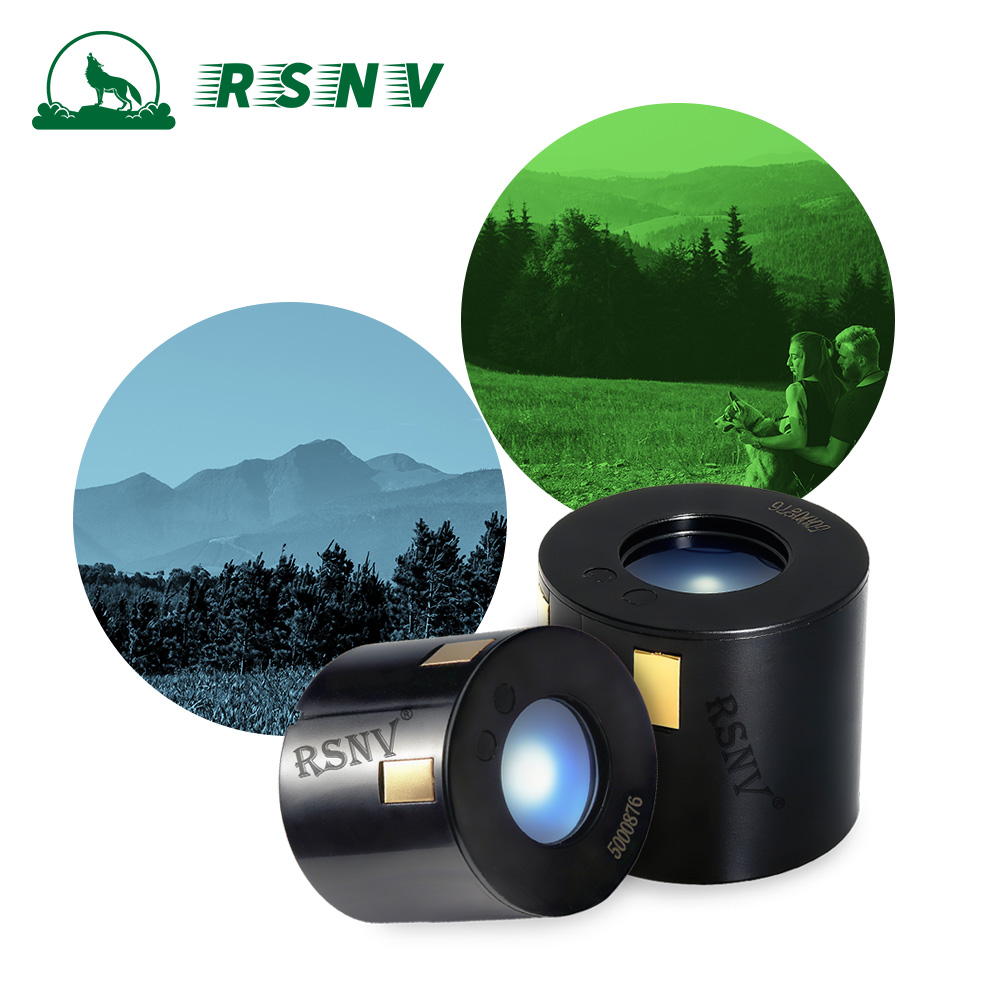
Helping Extend the Service Life of NNVT/CETC Image Intensifier Tubes
Sales Engineer: Grace Gao
Email: grace@rsnv.cn
WhatsApp: 0086-199 2997 5286
NNVT/CETC image intensifier tubes, especially Gen3 models equipped with gallium arsenide photocathodes, have excellent sensitivity in low-light environments, which lays a foundation for clear imaging of domestic night vision devices. However, the core components such as photocathodes and microchannel plates of the tubes are relatively sensitive to strong light—long-term or sudden exposure to strong light will not only cause attenuation of tube performance (such as reduced resolution and signal-to-noise ratio) but may even lead to irreversible permanent damage. Although the optional auto-gating technology can effectively cope with sudden strong light impacts in operational scenarios, it cannot fully cover all strong light risks in daily use. Supplementing with standardized manual protection operations is the key to maximizing the service life of NNVT/CETC tubes.
It should be clarified first that auto-gating technology and manual protection are not mutually exclusive, but complement each other. Auto-gating technology mainly plays a role in dynamic protection in operational scenarios, responding to sudden strong light such as explosion light, vehicle headlights and searchlights through microsecond-level voltage regulation; while manual protection focuses on pre-prevention and standardized operation in daily storage, inspection and use, avoiding strong light damage caused by improper human operation. The following practical skills are closely combined with the structural characteristics of NNVT/CETC tubes, focusing on solving common strong light risks in daily use.
It should be noted that after the sudden strong light disappears, the operator should not immediately restore the device to the high-gain working state, but observe the imaging effect for 3-5 seconds to confirm that the light environment is stable and the imaging is normal, then gradually adjust the gain back to the appropriate level. This can avoid the secondary impact of unstable light on the NNVT/CETC tube and reduce the load of the auto-gating module.
Thirdly, standardized storage and daily maintenance to build a multi-layer protective barrier for NNVT/CETC tubes. Proper storage can effectively avoid strong light damage during non-use. When the device is not used for a long time, it should be stored in a dark, dry and low-temperature environment, and the lens cover should be tightly covered to prevent stray light from entering. At the same time, the battery should be taken out to avoid power leakage causing the device to start accidentally and be exposed to strong light. When cleaning the lens, it is necessary to use a dedicated lens cleaning cloth and cleaning agent, and avoid cleaning under strong light—cleaning in a dark environment can prevent the cleaning agent from reflecting light and entering the tube body, and also avoid the operator accidentally turning on the device during cleaning and being exposed to strong light.
In addition, regular inspection and maintenance of the auto-gating module is also an important part of strong light protection. The normal operation of the auto-gating module is the basis for coping with sudden strong light. Users should regularly check whether the auto-gating function of the device is normal according to the operation manual of the domestic night vision device. If the imaging is distorted, delayed or the protection response is slow when encountering strong light, it should be stopped using in time and sent to a professional maintenance agency for inspection, so as to avoid the NNVT/CETC tube being damaged due to the failure of the auto-gating module.
For NNVT/CETC image intensifier tubes, strong light protection is a systematic work that requires the combination of built-in technology and manual operation. Auto-gating technology provides dynamic protection in operational scenarios, while standardized manual protection skills can avoid unnecessary strong light damage in daily use. By mastering the above practical skills, users can effectively reduce the risk of strong light damage to NNVT/CETC tubes, extend their service life, and ensure the stable performance of domestic night vision devices in various scenarios. This not only helps to reduce the use and maintenance cost of equipment but also provides reliable support for the smooth development of nighttime operations such as border patrol, emergency rescue and industrial inspection.